Our Living Culture
Share, Preserve, Protect, Recover, and Grow our resilient Cultural
Identity through Language and Traditions.
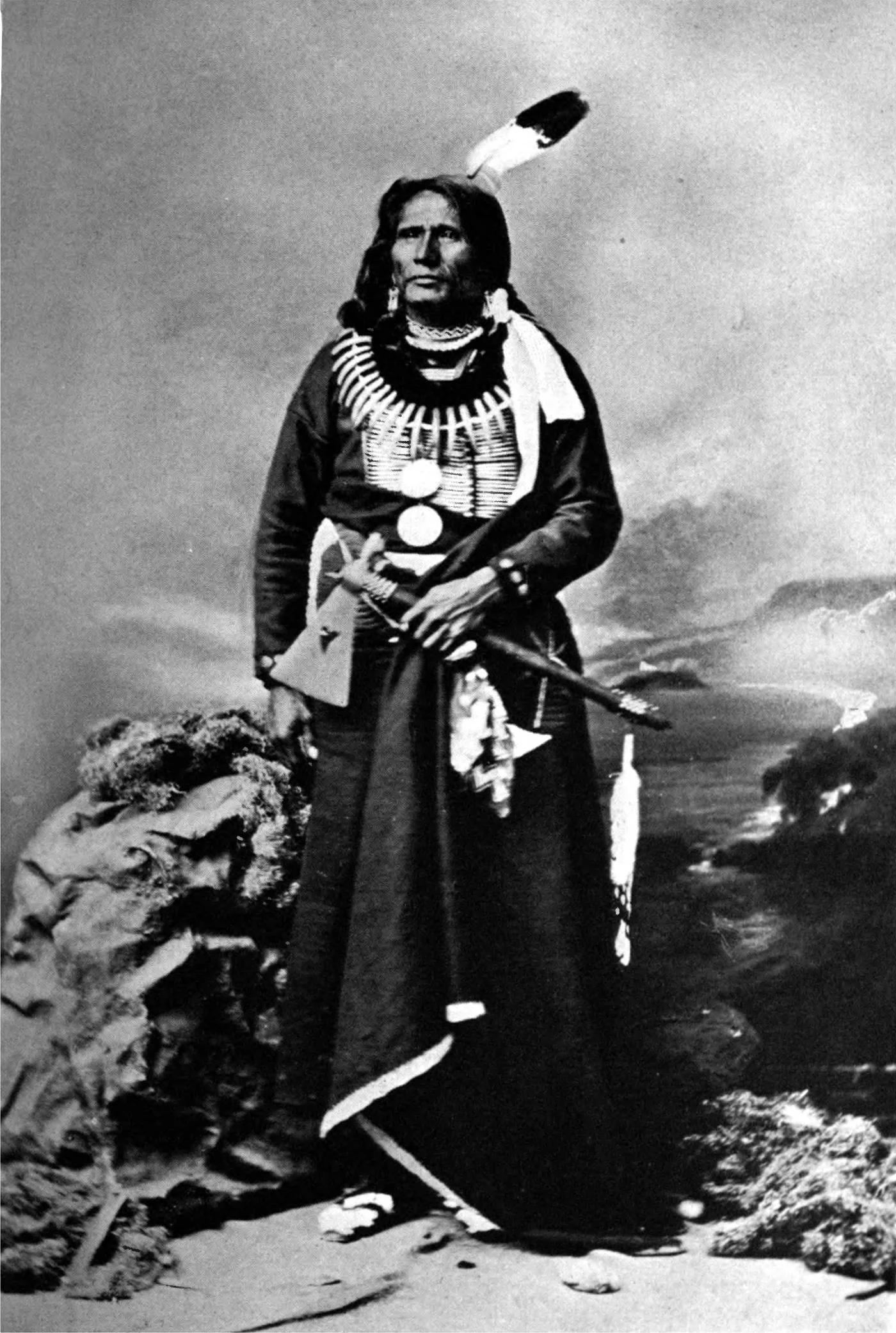
Standing Bear v. Crook, 1879
I am a man. The same God made us both.
After the Ponca were forcibly removed to Indian Territory in Oklahoma, Chief Standing Bear’s son died — but not before making his father promise to bury him in their homeland. Standing Bear led a small band of Ponca on a 600-mile journey home.
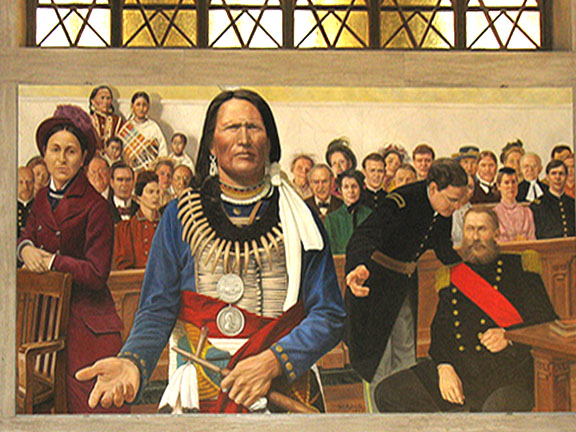
Arrested near Omaha by General George Crook, Standing Bear challenged his detention in federal court. On May 12, 1879, Judge Elmer Dundy ruled That “an Indian is a person” within the meaning of the law — the first time a Native American was recognized as a person with legal rights in a US court.
Homeland & Early History
The history of the P’ą́’k’a (Ponca) began long before our encounters with Europeans and the establishment of the United States. Our history has been carried across generations through our language, oral traditions, ceremonies, relationships, and the knowledge entrusted by our ancestors to the generations who followed.
Our ancestors carried an ancient name for the Atlantic Ocean: ní’t’ągà (Big Water). From the lands near the Big Water, we began a long migration westward that would eventually carry our people across much of the continent.
Our story did not begin when others encountered us or began writing about us. Our story has always belonged to us.
Our Dhegiha Beginnings
Our language and ancient history connect us to the other Dhegiha peoples whose descendants today include the P’ą́’k’a (Ponca), Umoⁿhoⁿ (Omaha), Osage, Kaw, and Ogáxpa (Quapaw) Nations.
Oral tradition preserves memories of ancient migrations when the ancestors of these related peoples traveled together before following different paths. Our shared ancestors traveled westward through the Ohio River Valley, eventually reaching the Mississippi River. There, our ancestors became part of the great Indigenous cultural world associated today with Cahokia, near present-day East St. Louis.
Cahokia and the surrounding Mississippi River Valley were home to large Indigenous communities supported by agriculture, extensive trade networks, ceremony, and traditions of constructing monumental earthworks and mounds. Our ancestors participated in this broader cultural world before continuing their journey.
These eastern origins remain important to understanding who we are today. Although generations of Ponca people would eventually make their homes on the Great Plains, moving west did not require us to abandon everything that came before.
The Dhegiha Peoples Separate
It was around the Mississippi River that the Dhegiha peoples began following different paths.
Our oral history remembers the Ogáxpa, or Quapaw, as the first to separate. As the people crossed the Mississippi River using a vine, the vine broke, separating part of the people and carrying them downstream. Their name, Ogáxpa (Downstream People), preserves the memory of that separation.
The Osage and Kaw eventually traveled farther west and southwest, while the ancestors of the Ponca and Umoⁿhoⁿ continued northward together. The name Umoⁿhoⁿ (Upstream People) also preserves the history of this ancient movement and separation.
Our ancestors eventually reached present-day southeastern South Dakota and southwestern Minnesota, where they lived within one of the great Indigenous village complexes of the region. Our people knew this place as Ú’dą̀’ Mąžą́ (Good Earth). Today, this culturally important landscape is associated with the Blood Run archaeological complex and Good Earth State Park near present-day Sioux Falls.
Ú’dą̀’ Mąžą́ was home to large Indigenous communities where our ancestors lived among and interacted with other Native peoples, including the Ioway. Agriculture, trade, ceremony, mound building, and relationships among Indigenous peoples were all part of life within this landscape.
After leaving Ú’dą̀’ Mąžą́, the Ponca and Umoⁿhoⁿ continued their journey together. Eventually, these two related peoples followed separate paths. The Umoⁿhoⁿ followed the Missouri River farther south, while our Ponca ancestors traveled west toward P’ahé Sábe (Black Hills).
Becoming P'ą'k'a
There are different traditional interpretations of our name. Among them are “Those Who Lead” and “the Head.” These interpretations have been carried within our community as part of our understanding of who we are and our place among our relatives.
Our journey onto the Great Plains required adaptation, but adaptation did not mean abandoning who we were. In the eastern woodlands, our ancestors lived in longhouses constructed from the materials of that environment. As our people established themselves on the Great Plains, we continued to exchange knowledge with other Indigenous Nations.
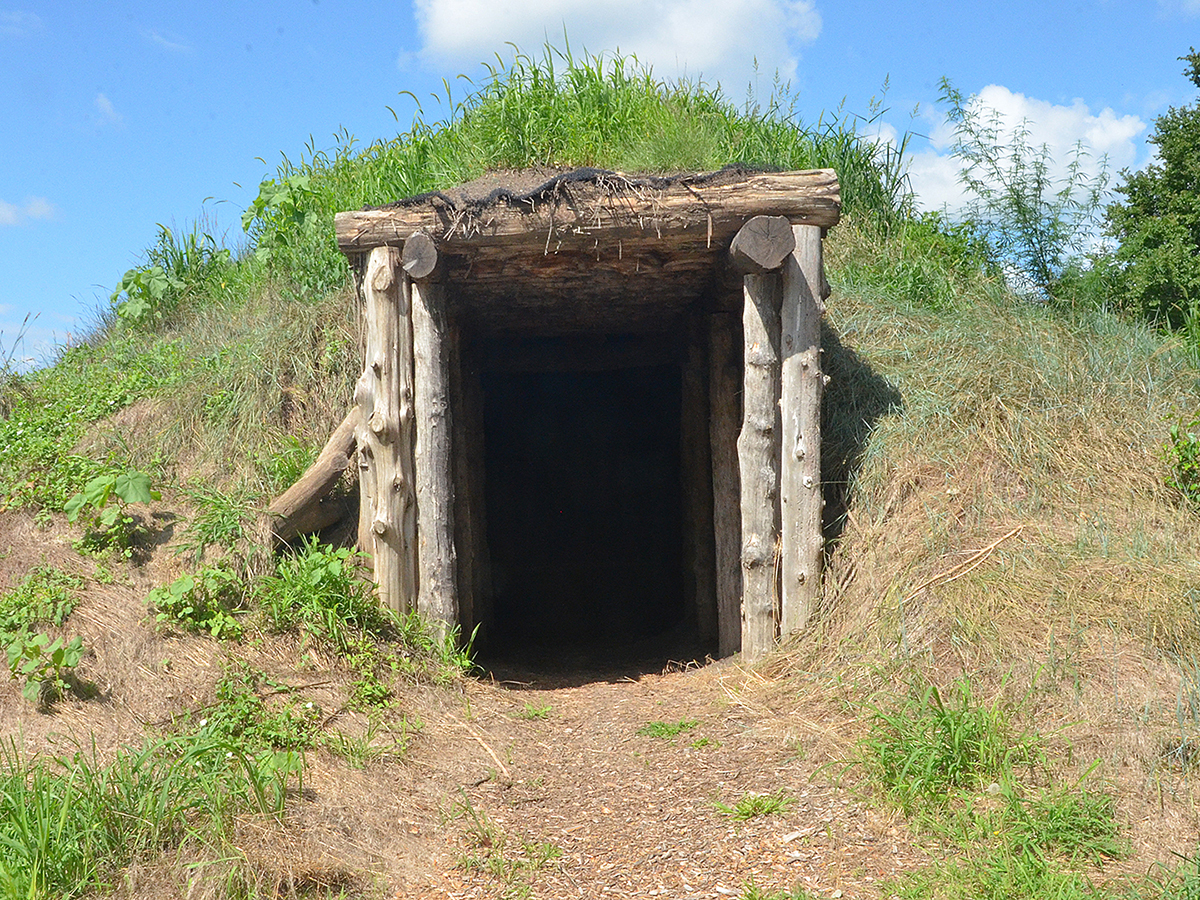
Ponca tradition remembers that the Arikara shared knowledge with our people about constructing and living in the mąíti (the earthen lodge). Built from wooden poles, thatch, and earth, these circular dwellings were well suited to established agricultural communities on the Plains and became an important feature of Ponca village life.
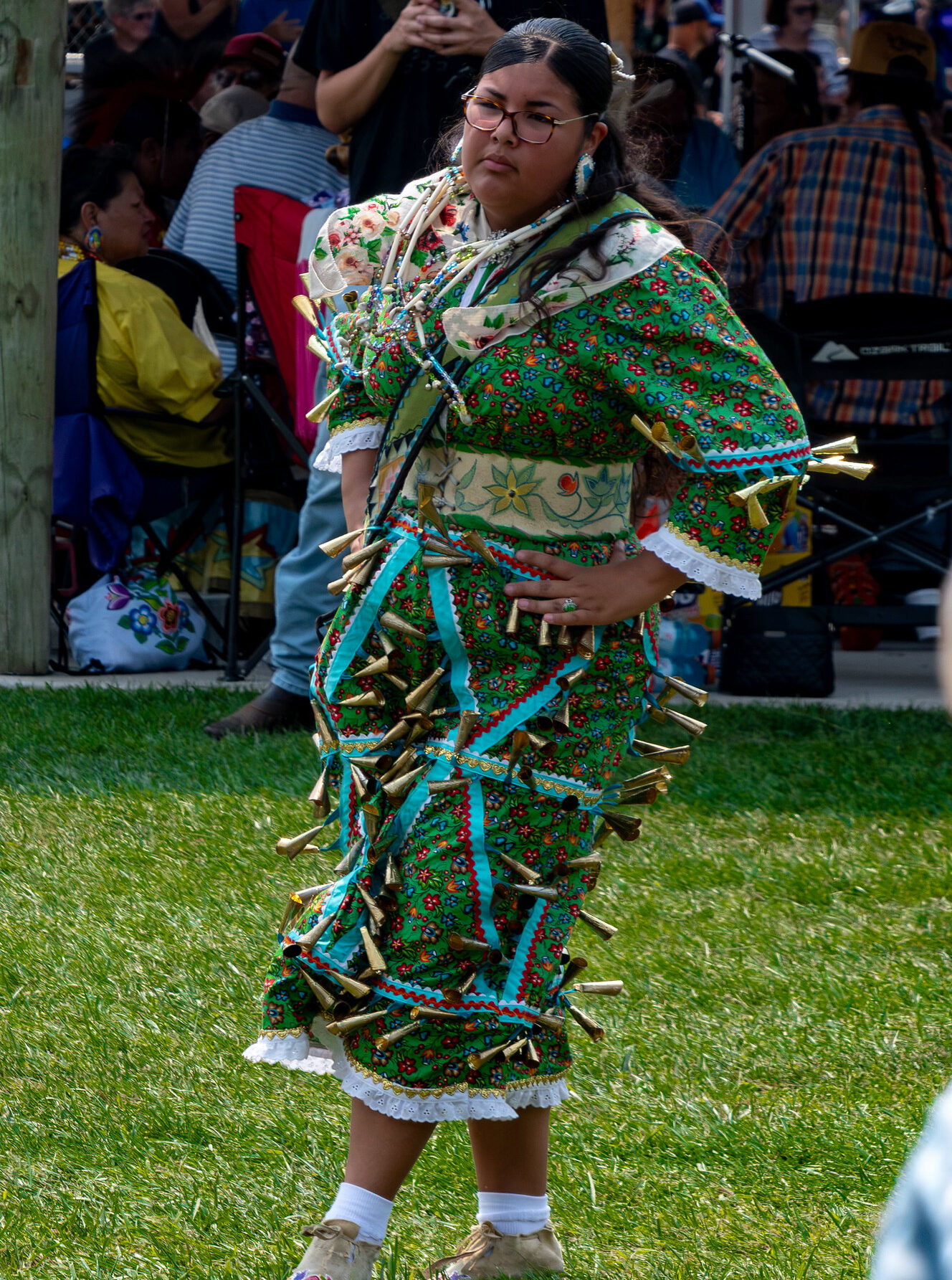
Still, our older teachings traveled with us. That continuity remains visible in Ponca culture today. Many of our artistic traditions retain a strong connection to the floral forms associated with our eastern heritage. Flowers, leaves, vines, and other elements of the natural world continue to appear prominently in Ponca designs, even as our people became firmly established on the Great Plains.
Family, Clan, and Community
Our villages were communities of extended families in which multiple generations shared the responsibilities of everyday life. Grandparents, parents, children, and other relatives lived in close relationship with one another, allowing knowledge and responsibilities to pass naturally from one generation to the next. Children learned what it meant to be P’ą́’k’a not only through instruction, but by watching, listening, participating, and growing within a community of relatives.
Beyond individual households, our clans helped organize Ponca society. Clan relationships connected families across the larger Nation and carried responsibilities involving kinship, marriage, leadership, and community life.
Generosity was central to those relationships. Giving began within the family, where children learned through the example of their relatives that what a person possessed carried responsibilities to others.
These values helped bind our communities together and ensured that knowledge was not held only for oneself, but carried forward for future generations.
Living With the Land
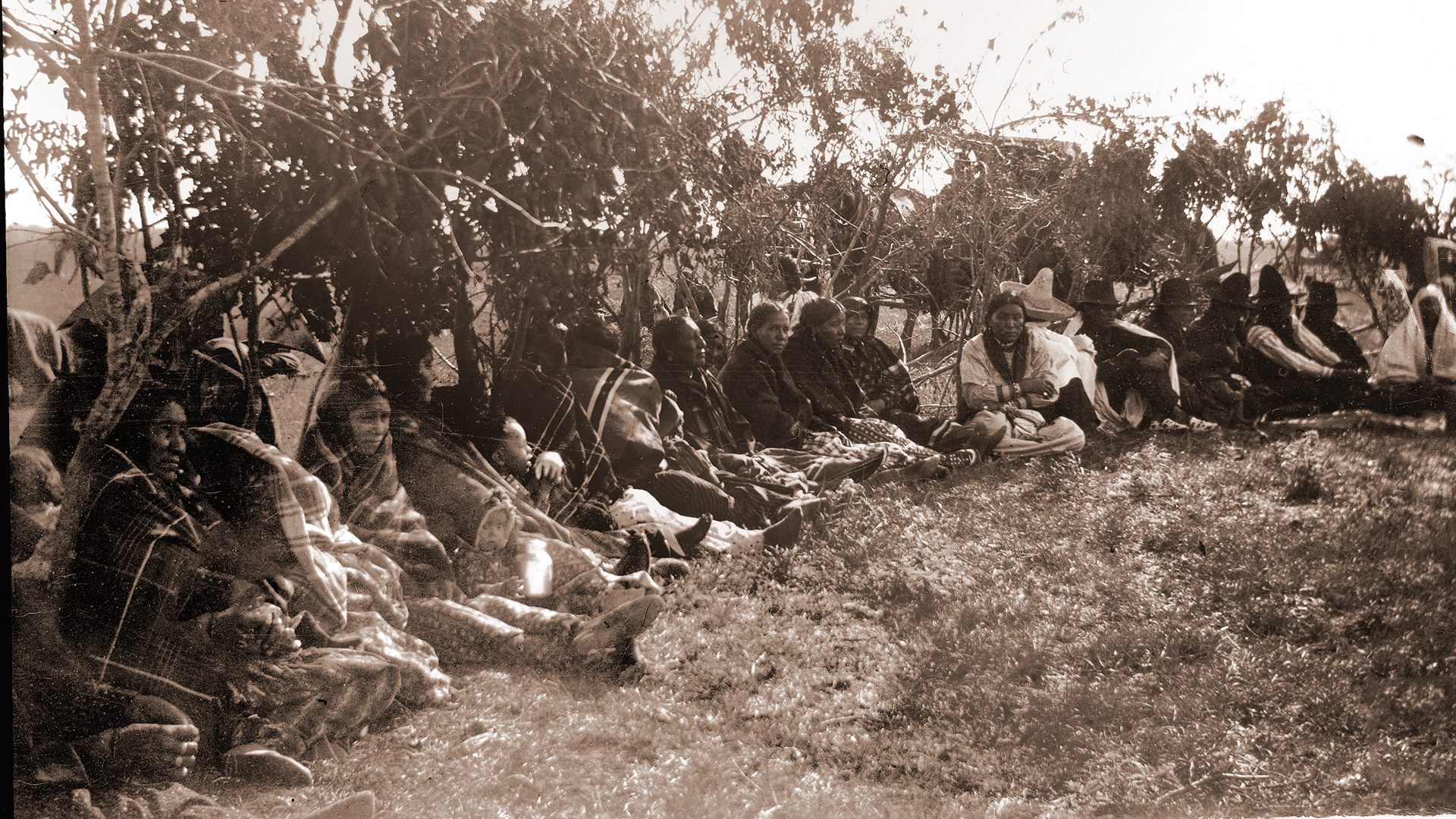
Ponca life followed the seasons. The Ponca were accomplished agriculturalists. They planted and harvested watą́ zi (corn) and other crops in the fertile lands surrounding our villages.
Among the corn still grown by Ponca people today is Ponca Grey Corn, preserved and passed from one generation to another. Its seed connects our people to an agricultural tradition extending back through countless generations.
We were also excellent fishermen, drawing sustenance from the rivers and tributaries surrounding our communities. Hunting and gathering provided additional food and materials necessary for our people.
Each year, our people conducted two major hunts for t’é (buffalo) traditionally in the spring and fall. Families left their established villages and traveled onto the Plains to follow the buffalo before returning to their homes, fields, and riverways.
Ponca life combined established agricultural villages with fishing, hunting, gathering, and seasonal travel. We understood the seasons and knew when to plant, when to harvest, when to hunt, when to fish, and when to travel.
Ponca tradition also teaches that our people did not occupy a single village site indefinitely. After living and farming in an area for a period of time, a community would move to a new location, allowing the previously occupied mąžą́ (land) an opportunity to recover. The land sustained our people, and our people understood that we carried responsibilities to the land in return.

Mažą' Iš'áge – Our Homelands
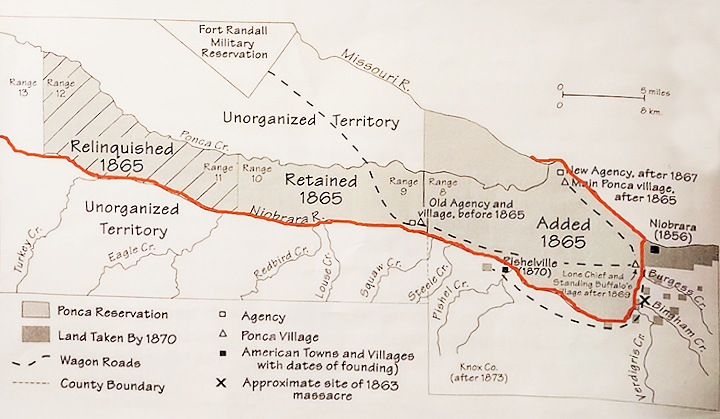
Eventually, our people traveled eastward again from the Black Hills and established communities throughout the river valleys of what are now southern South Dakota and northern Nebraska. This country became our mažą́ iš’áge (homelands).
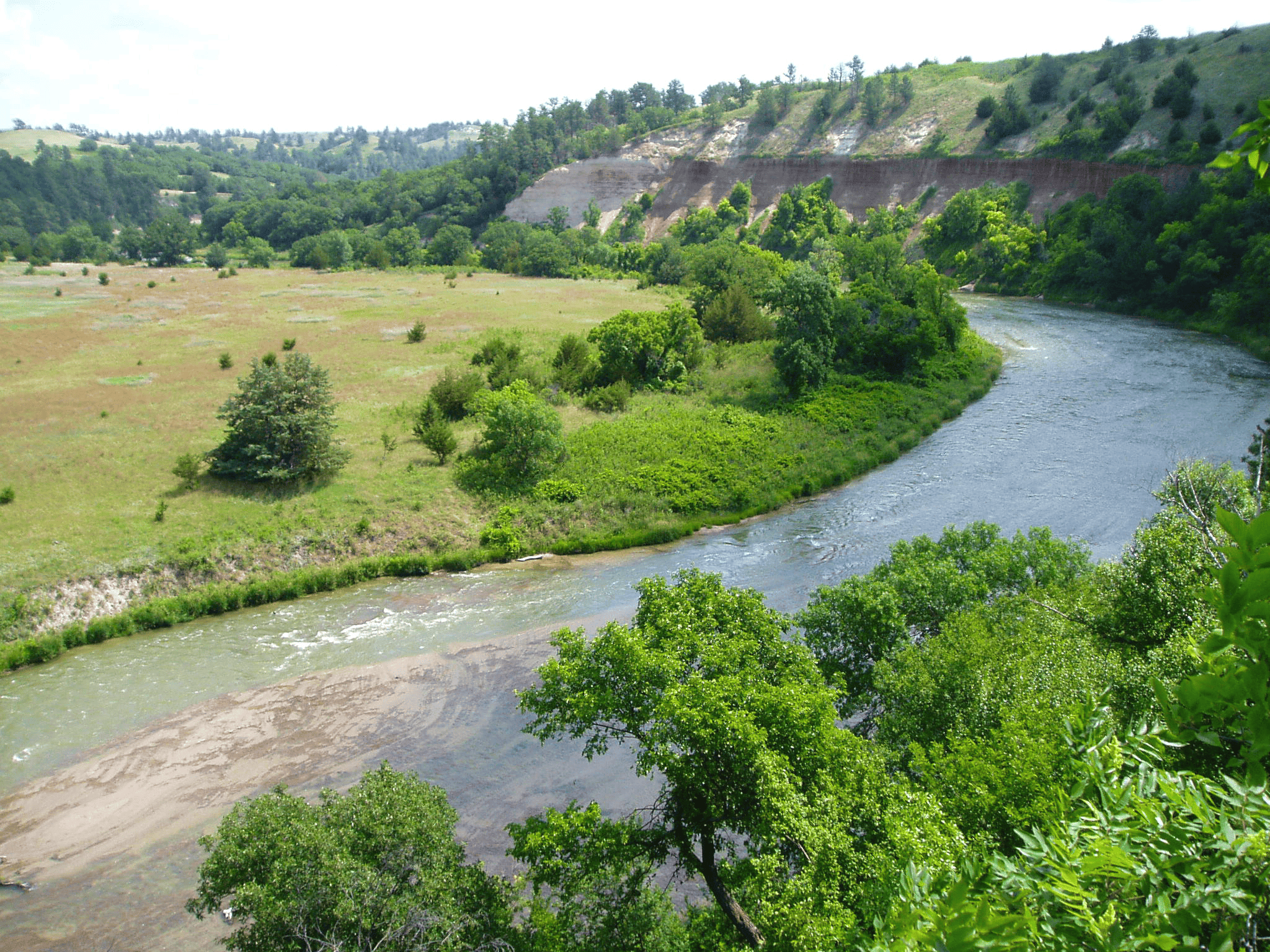
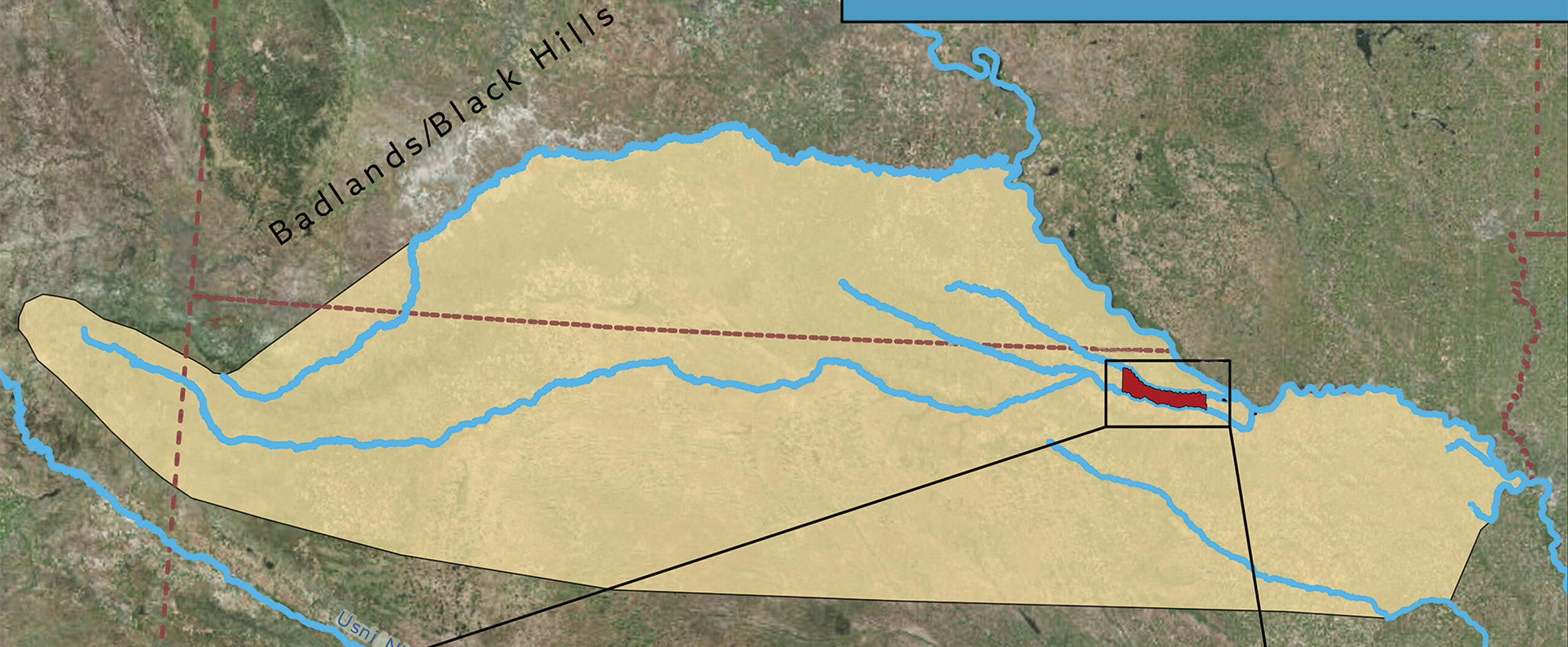
Our homelands encompassed a vast landscape west of the Missouri River and across what is now Nebraska. Our people lived, hunted, traveled, traded, and maintained relationships throughout a network of waterways that included the Missouri River, Niú’bđáđa (the Niobrara River), the Elkhorn River, the Platte River, Ponca Creek, and their tributaries. Our connections extended westward toward P’ahé Sábe (the Black Hills).
The Niobrara and Missouri River country became an especially important center of Ponca life and one of the final strongholds of our people before the tremendous upheavals of the nineteenth century.
Our Three Villages
Near the confluence of the Niú’bđáđa (the Niobrara River) and the Missouri River stood three of our last major village communities before the forced removal of our people to Indian Territory.
Hubđą́ (Fish Smell Village): Hubđą́, literally referring to “the smell of fish,” was one of our three historic village communities near the confluence of the Niobrara and Missouri Rivers.
Wa’į́’xudè (Gray Robe Village): Wa’į́’xudè was another of the three communities where our ancestors lived within our Nebraska homelands before removal.
K’ú’he’wađè (Scary Village): K’ú’he’wadè carries a name referring to a place that is scary or to something that makes a place scary. It was the third of these historic Ponca village sites near the confluence of the Niobrara and Missouri Rivers.
These were not merely settlements or archaeological sites. They were our communities. Here we built mąíti, raised families, planted and harvested crops, hunted t’é, fished the rivers, practiced our ceremonies, buried our relatives, and passed our language, knowledge, and responsibilities from one generation to the next.
Hubđą́, Wa’į́’xudè, and K’ú’he’wađè existed within a much larger Ponca cultural landscape. The surrounding agricultural fields, hunting grounds, waterways, trails, gathering areas, sacred places, and burial grounds were known, traveled, used, and cared for by generations of our people. By the beginning of the nineteenth century, this country was already home to generations of P’ą́’k’a. Our villages were part of a living Nation within a living homeland.
Trial of Standing Bear
The U.S. government forcibly removed the Ponca from their Nebraska homeland to Indian Territory in Oklahoma. The brutal march resulted in the deaths of many tribal members, including Chief Standing Bear’s son, Bear Shield.
Chief Standing Bear made the historic journey back to Nebraska to bury his son in the homeland. He and 29 followers were arrested by General George Crook near Fort Omaha for leaving the reservation without permission.
Judge Elmer Dundy ruled in Standing Bear v. Crook that Native Americans are ‘persons’ under the law and have the right to seek a writ of habeas corpus. It was the first time this had ever been declared in U.S. history.
A significant moment in both our Ponca Tribe history and in civil rights history was the “Trial of Standing Bear” in 1879. A series of treaties signed with the federal government between 1817 and 1865 saw our homelands dwindle from their original range to an assigned 96,000 acres. The 1868 Fort Laramie Treaty, between the federal government and the Sioux, took the majority of that land, setting the stage for the Ponca Trail of Tears. In the spring of 1877, we were forcibly moved to Indian Territory. Many died along the trail, including White Buffalo Girl, daughter of Black Elk, and Prairie Flower, daughter of Standing Bear.
In the year following the removal from our homelands, we lost nearly a third of our members to disease and starvation, including Standing Bear’s son, Bear Shield. Bear Shield’s dying wish was to be buried in the Ponca homelands. Promising to honor his son’s dying wish, in January of 1879, Standing Bear and a band of followers left Indian Territory without the permission of the US Government, and began the arduous trek home.
Standing Bear’s actions would put him on track to become a civil rights leader. Arrested for leaving Indian Territory, Standing Bear had his day in court, defending himself and his people with dignity and eloquence as he argued for the personhood of Native Americans, “That hand is not the color of yours, but if I pierce it, I shall feel pain. If you pierce your hand, you also feel pain. The blood that will flow from mine will be the same color as yours. I am a man. God made us both.” Standing Bear’s impassioned plea led to a verdict proclaiming, for the first time, that Native Americans were persons under the meaning of the law.
Standing Bear and his followers were free to return to their homeland. However, as our ancestral homelands had been taken and redistributed by the federal government, they had no home to return to. Eventually, 26,000 acres in Knox County would be restored to us. Standing Bear and many of his followers returned to the Niobrara, NE area, while other relatives remained where they had settled in Indian Territory in Oklahoma.
Standing Bear’s legacy as prominent figure in the early civil right movement is honored by statues on tribal lands in both Niobrara, NE and White Eagle, OK, in downtown Lincoln, NE, and in the Hall of Statuary in Washington, DC.
1962 – 1990
Federal
Termination
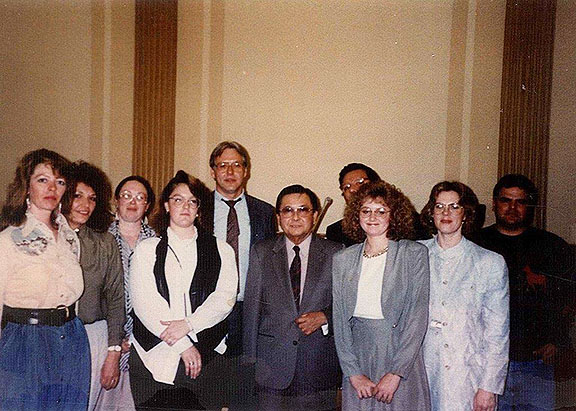
During the Termination Era of the 1950s and 1960s, the United States government began terminating its special trustee relationship with Native tribes. Showcased as a way to liberate tribes from federal control, in actuality, this policy focused on erasing Native American rights and eliminating the treaty obligations of the federal government to tribes across the United States, affecting approximately 109 tribes and bands and almost 1.5 million acres of trust land. In 1966, the Ponca Tribe of Nebraska was federally terminated. As land holdings were dissolved, cultural heritage began to disappear, and tribal members moved away, there were those who fought to restore the Tribe’s federally recognized status.
A New Beginning
Restoration &
Sovereignty Regained
The Size of the Ponca Nation
We were never a large tribe. The tribe’s probable size in 1780 was estimated at 800. By 1804, largely because of smallpox, their numbers dwindled to around 200. By 1829, their population had increased to 600 and by 1842, to about 800. In 1906, the Ponca in Oklahoma numbered 570 and those in Nebraska, 263. The census of 1910 listed 875 Poncas, including 619 in Oklahoma and 193 in Kansas. By 1937, the Ponca population reached 1,222 with 825 in Oklahoma and 397 in Nebraska. Today, the Ponca Tribe of Nebraska alone numbers close to 6,000.
| Year | Population | Details |
|---|---|---|
| 1780 | ~800 | Estimated tribal population |
| 1804 | ~200 | After devastating smallpox epidemics |
| 1829 | 600 | Population recovery begins |
| 1842 | ~800 | Continued growth |
| 1906 | 263 | Ponca in Nebraska after removal |
| 1910 | 875 | Census count across all regions |
| 1937 | 1,222 | 397 in Nebraska, 825 in Oklahoma |
| 1966 | 442 | Population at termination |
| Today | 6,000 | Enrolled members served |
A Thriving Sovereign Nation
The Ponca Tribe of Nebraska is the name used to describe the Northern Ponca Tribe after the Tribe was officially restored in 1990. Today the Ponca Tribe of Nebraska serves over 6,000 enrolled members across a 15-county service delivery area in Nebraska, Iowa, and South Dakota.
The Tribe provides comprehensive health, education, housing, and cultural services; honoring the resilience of a people who refused to disappear and building a future rooted in the traditions and sovereignty of the Ponca Nation.